
Eyelid Surgery
Refresh tired-looking eyes, reduce excess eyelid skin and puffiness, and restore a more alert appearance with blepharoplasty tailored to your individual anatomy.
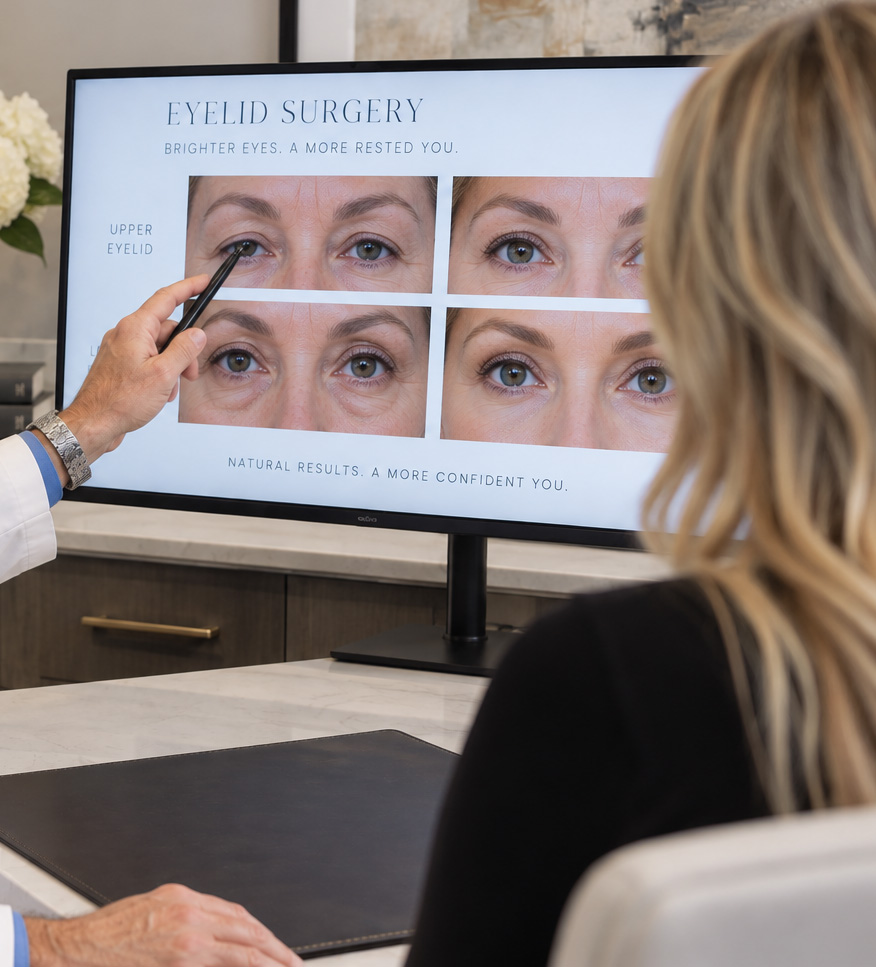
Look More Rested Without Looking Different
The skin and tissues around the eyes are among the first areas of the face to show changes associated with aging, genetics, and loss of elasticity.
Excess upper-eyelid skin, puffiness, under-eye bags, and lower-eyelid laxity can create an appearance that looks tired or older even when you feel energetic and well rested.
Eyelid surgery, or blepharoplasty, is designed to refine these areas while preserving the natural shape and expression of your eyes.
What Can Eyelid Surgery Treat?
Upper and lower blepharoplasty can address different concerns around the eyes depending on your anatomy and goals.
Upper-Eyelid Hooding
Excess upper-eyelid skin that creates a heavy or hooded appearance.
Puffy Upper Eyelids
Prominent fatty tissue that creates fullness around the upper eyes.
Under-Eye Bags
Fatty prominence or tissue changes that create visible bags beneath the eyes.
Loose Lower-Eyelid Skin
Excess or lax skin beneath the eyes that contributes to an aged appearance.
Fine Lower-Eyelid Wrinkles
Selected fine lines associated with excess or lax lower-eyelid skin.
Tired Appearance
Eyelid changes that make the eyes appear fatigued even when you feel rested.
Is the Heaviness Coming From Your Eyelids — or Your Brow?
Not all upper-eye heaviness originates from the eyelid itself.
A descended eyebrow can push tissue downward and contribute to hooding over the upper eyelid. Removing eyelid skin alone may not fully correct that problem when brow position is a significant factor.
Dr. Slack evaluates both the eyelids and brow before recommending surgery.
Blepharoplasty
Addresses excess eyelid skin, selected fatty tissue, and eyelid-specific contour concerns.
Brow Lift
Repositions a descended eyebrow when brow ptosis is contributing to upper-eye heaviness.
Who Is a Good Candidate for Eyelid Surgery?
Blepharoplasty may be appropriate for healthy adults who are bothered by upper- or lower-eyelid changes and have realistic expectations about what surgery can accomplish.
Excess or hooded upper-eyelid skin
Under-eye bags or puffiness
Loose lower-eyelid skin
A persistently tired-looking eye area
Good general health
Realistic expectations about surgery and healing
How Is Eyelid Surgery Performed?
The technique depends on whether the upper eyelids, lower eyelids, or both are being treated.
Upper Eyelid Incision
The incision is generally positioned within the natural crease of the upper eyelid so the resulting scar blends into the normal eyelid fold.
Tissue Refinement
Excess skin is removed conservatively, and fatty tissue may be removed or repositioned when appropriate.
Lower Eyelid Approach
Lower-eyelid surgery may use an incision just beneath the lashes or, in selected patients, an incision on the inside of the eyelid.
Closure
Incisions are carefully closed with fine sutures or another appropriate closure technique to support delicate healing.
Before & After Eyelid Surgery
Every patient's eyelid anatomy is different. Before-and-after photographs can help illustrate the type of change that may be possible while showing the range of individual results.
View Before & After Gallery →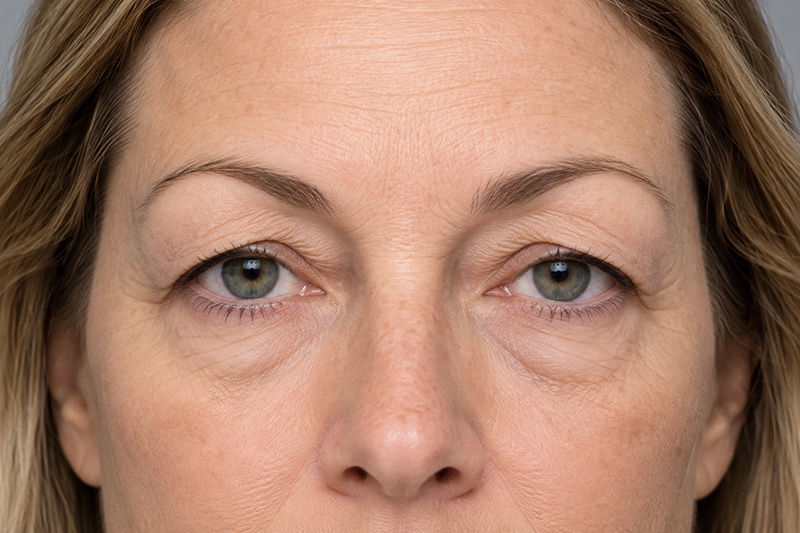
Can Eyelid Surgery Be Combined With Other Procedures?
Yes. When aging changes involve more than the eyelids, blepharoplasty may be incorporated into a broader treatment plan.
Brow Lift
Reposition a descended brow when brow ptosis contributes to upper-eye heaviness.
Learn More → 02Facelift
Address facial laxity when rejuvenation is needed beyond the eye area.
Learn More → 03BOTOX®
Address selected dynamic lines such as crow's feet that eyelid surgery itself does not correct.
Learn More →Dermal Fillers
Selected nonsurgical treatments may complement surgical rejuvenation depending on facial anatomy and goals.
Can Eyelid Surgery Improve Vision?
For most patients, eyelid surgery is performed to improve appearance.
In some patients, however, significant excess upper-eyelid skin can hang low enough to interfere with the upper visual field.
When this occurs, removing appropriately selected excess tissue may provide a functional benefit in addition to cosmetic improvement.
When Eyelid Skin Affects Your Field of Vision
Dr. Slack can evaluate whether upper-eye heaviness is coming from excess eyelid skin, brow descent, or a combination of both.
Eyelid Surgery Recovery
Blepharoplasty is performed on delicate tissues, so swelling and bruising around the eyes are expected during early recovery.
Dr. Slack and his staff provide detailed postoperative instructions and monitor healing during scheduled follow-up appointments.
Swelling & Bruising
These are common after surgery and gradually improve as healing progresses.
Temporary Tightness
The eyelids may initially feel tight, swollen, or mildly uncomfortable.
Suture Removal
When removable sutures are used, Dr. Slack will remove them according to your healing progress.
Gradual Improvement
The eye area continues to look more refined as swelling resolves and incisions mature.
Will I Have Visible Eyelid Surgery Scars?
Any surgical incision creates a scar, but eyelid surgery offers natural anatomical locations that can help camouflage the incision.
Upper-eyelid incisions are generally placed within the natural eyelid crease. Lower-eyelid incisions may be placed just beneath the lash line or inside the lower eyelid, depending on the technique being used.
Scars are typically more noticeable during early healing and gradually become less conspicuous as they mature.
Designed to Blend With Eyelid Anatomy
Incision location is planned around the natural folds, creases, and contours surrounding the eyes whenever possible.
How Long Do Eyelid Surgery Results Last?
The tissue removed during blepharoplasty does not simply return after healing, so results can be long lasting.
However, eyelid surgery does not stop the aging process. The skin and soft tissues around the eyes will continue to change gradually over the years.
Rested. Refreshed. Still You.
Successful eyelid surgery should make the eyes look less tired or heavy without changing the recognizable character of your face.
Eyelid Surgery Frequently Asked Questions
Common questions about upper and lower blepharoplasty, scars, recovery, and results.
Blepharoplasty is eyelid surgery designed to address excess skin, selected fatty tissue, and other contour changes involving the upper eyelids, lower eyelids, or both.
Upper blepharoplasty primarily addresses excess skin and selected fullness of the upper eyelids. Lower blepharoplasty focuses on under-eye bags, lower-eyelid contour, and selected skin laxity.
In selected patients, significant excess upper-eyelid skin can obstruct the upper visual field. Removing appropriately selected excess tissue may improve function when eyelid skin is contributing to the problem.
It depends on where the heaviness originates. Blepharoplasty treats eyelid-specific concerns, while a brow lift repositions a descended eyebrow. Some patients benefit from a combination of both procedures.
Not necessarily. Crow's feet are dynamic lines at the outer corners of the eyes and are commonly treated with nonsurgical options such as BOTOX®. Eyelid surgery is primarily designed to address eyelid skin, fat, and contour.
Upper-eyelid incisions are generally placed within the natural eyelid crease. Lower-eyelid incisions may be positioned just beneath the eyelashes or inside the lower eyelid depending on the technique selected.
Yes. All surgical incisions create scars, but eyelid incisions are placed in natural folds or discreet locations whenever possible. They typically become less noticeable as they mature.
Recovery varies from patient to patient. Swelling and bruising are expected early and gradually improve. Dr. Slack will provide individualized guidance for returning to work, exercise, and normal activities.
Blepharoplasty results can be long lasting, but the procedure does not stop aging. Skin and soft tissues will continue to change naturally over time.
Yes. Depending on your anatomy and goals, eyelid surgery may be combined with procedures such as a brow lift, facelift, or selected nonsurgical facial rejuvenation treatments.
Find Out What Is Making Your Eyes Look Heavy or Tired
Dr. Slack evaluates the upper eyelids, lower eyelids, brow position, skin quality, and surrounding facial anatomy before recommending treatment.
Give Your Eyes a More Rested, Refreshed Appearance
Meet personally with Dr. Charles Slack in Allen, Texas to discuss whether upper eyelid surgery, lower eyelid surgery, or a combination approach may be appropriate for you.
Allen, Texas · Serving Plano, McKinney, Frisco & North Dallas