
Breast Augmentation
Personalized breast augmentation with saline, silicone, and Serene structured saline implants — guided by Dr. Charles Slack's fellowship-trained expertise and individualized approach.
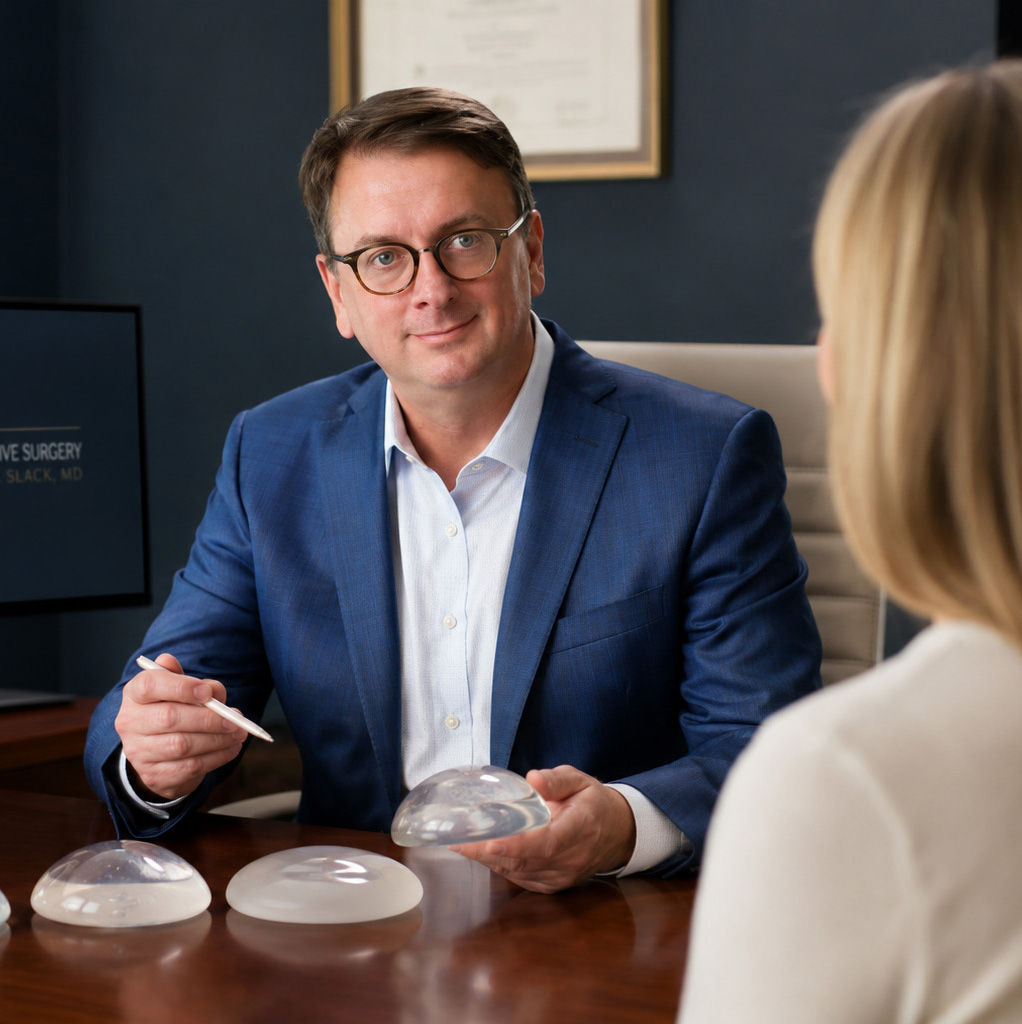
Why Choose Dr. Slack for Breast Augmentation?
Dr. Slack received specialized fellowship training in cosmetic and reconstructive breast surgery at Georgetown University — one of the few plastic surgeons in North Texas with this additional credential. He has been recognized by D Magazine as one of Dallas–Fort Worth's Best Doctors and is a member of the American Society of Plastic Surgeons.
What sets Dr. Slack apart is his commitment to individualized care. He meets personally with every patient during consultation, takes time to understand your goals, and explains candidly what breast augmentation can and cannot achieve for your specific anatomy.
Your Implant Options
Choosing the right implant is one of the most important decisions in the breast augmentation process. Dr. Slack offers saline, silicone gel, and Serene structured saline implants.
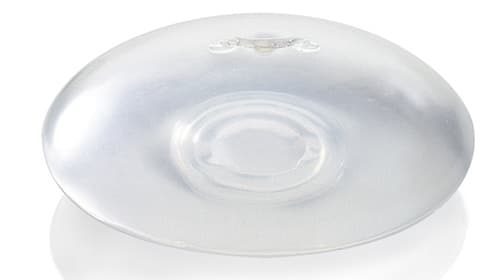
Saline
Filled with sterile saline at the time of surgery
Saline implants are generally less expensive than silicone. If a rupture occurs, the saline is safely absorbed by the body and the change is immediately visible.
They can feel somewhat watery in patients who have limited natural breast tissue, and visible rippling may be more common.
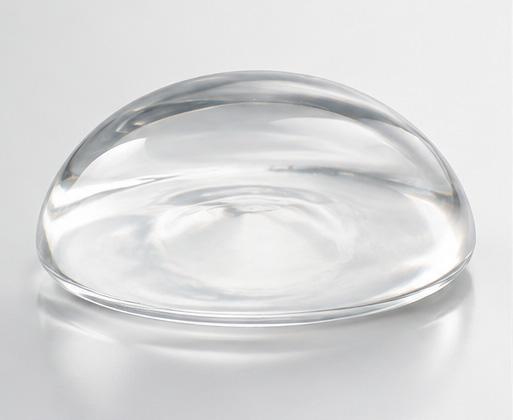
Silicone Gel
Pre-filled with cohesive silicone gel
Silicone implants tend to provide the softest, most natural feel and typically show less visible rippling, particularly in patients with less natural breast tissue.
Because rupture can be silent, the FDA recommends imaging beginning 5–6 years after augmentation and every 2–3 years thereafter.
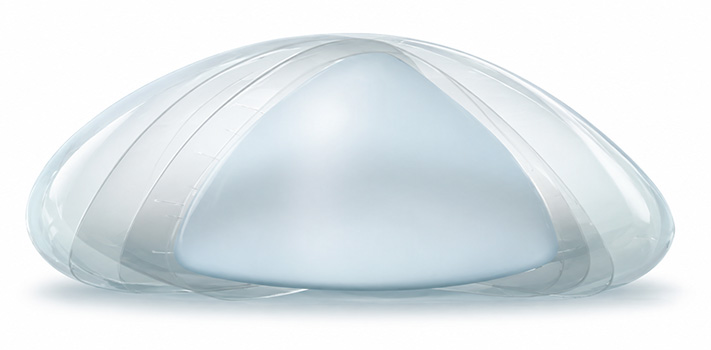
Serene
Formerly known as the IDEAL IMPLANT
Serene uses two saline chambers and internal baffles to create a feel closer to silicone while maintaining the benefits of saline.
Dr. Slack participated in the original FDA approval trials, giving him firsthand experience with this unique implant.
The Serene Structured Saline Implant
Originally developed and marketed as the IDEAL IMPLANT, this structured saline device was acquired by Bimini Health Tech and is now marketed under the name Serene.
Dr. Slack was involved in the initial clinical trials that led to FDA approval of the IDEAL IMPLANT, giving him firsthand knowledge of the device that few surgeons in North Texas can claim.
The technology uses internal baffles and structured chambers within the silicone shell to slow saline movement, reduce rippling, and create a look and feel many patients find comparable to silicone — without silicone gel.
Unlike a traditional single-chamber saline implant, Serene contains two chambers. If its smaller outer chamber leaks, the resulting change may be less immediately noticeable.
Dr. Slack offers Serene for patients who want an option that combines many of the aesthetic qualities of silicone with the simplicity of saline.
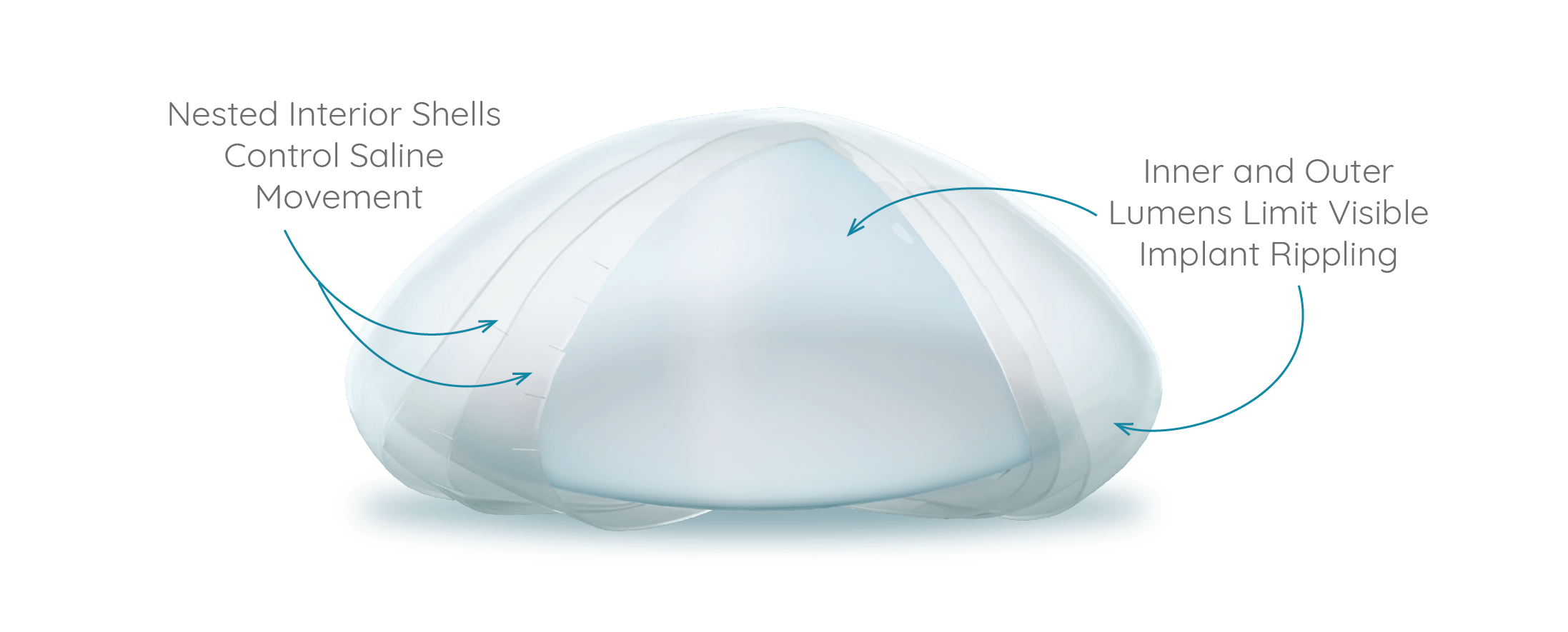
Serene Structured Saline Implant cross-section showing internal baffle chambers.
Implant Profile and Fit
Breast augmentation is not simply about choosing an implant size. The implant needs to fit your individual breast dimensions and chest anatomy.
Breast implants come in a range of profiles — typically low, low-plus, moderate, high, and extra-high. Profile refers to how far an implant projects forward from the chest wall. The higher the profile, the more pronounced and rounded the upper breast appears.
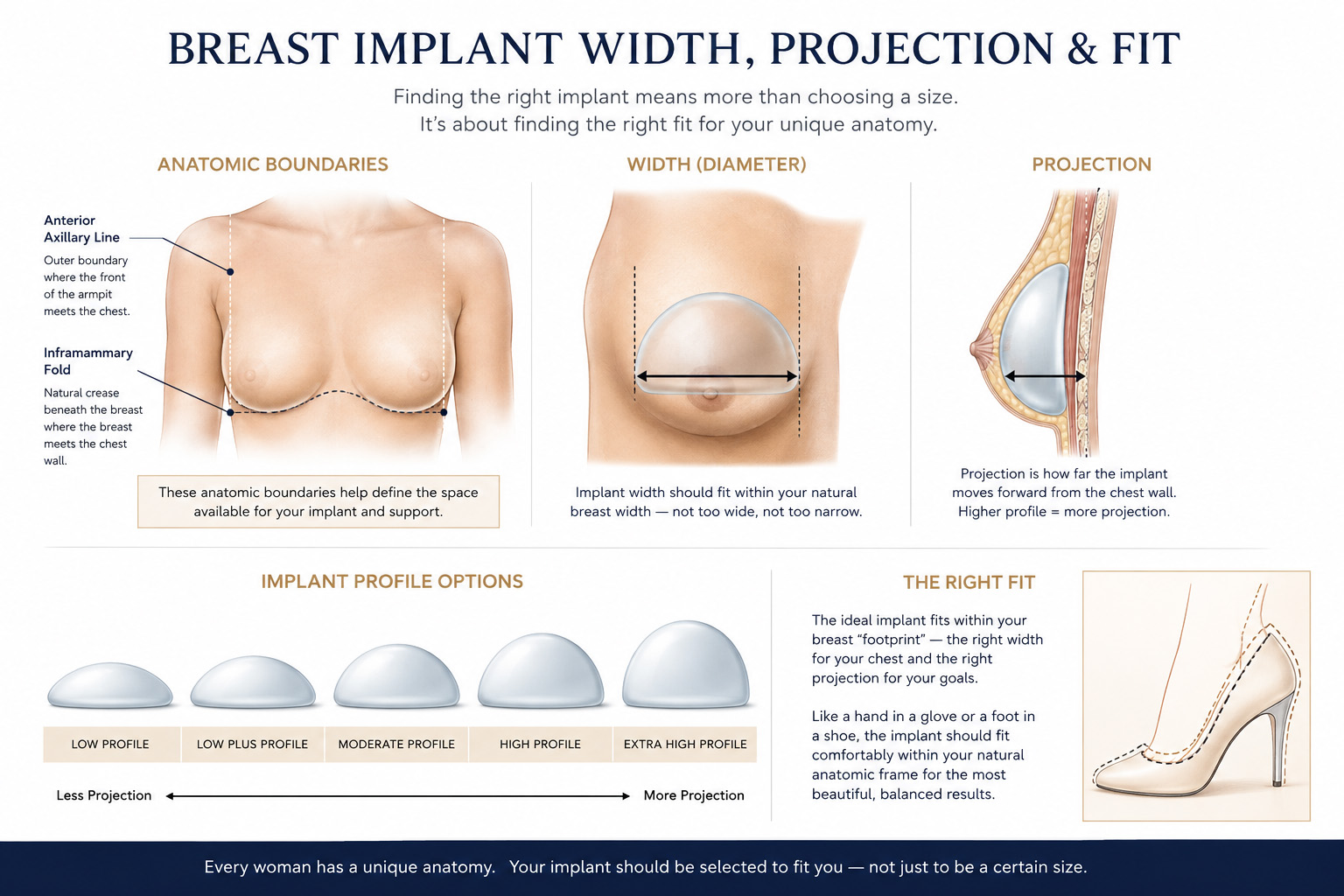
Finding the Right “Breast Print”
Dr. Slack works within a set of anatomic boundaries, including the inframammary fold beneath the breast and the anterior axillary crease where the front edge of the armpit meets the chest.
By combining those measurements with the width of the breast, he defines the frame the implant needs to fit within.
For a round implant, diameter determines both width and height. An implant that extends too high can create an overly full upper pole, while an implant that is too wide may extend beyond the natural breast tissue.
Dr. Slack thinks of implant selection like fitting a hand in a glove or a foot in a shoe — every patient has a “breast print,” and the implant should fit reasonably within it.
Above or Below the Muscle?
The implant pocket — the space where your implant is placed — can significantly influence the appearance, feel, and recovery associated with breast augmentation.
Under the Muscle
Submuscular PlacementThis is Dr. Slack's most frequently recommended option. The chest muscle provides additional implant coverage, creating a more natural-looking and less rounded upper breast.
- Additional tissue coverage
- Reduced visibility of rippling
- More gradual upper breast contour
- Can provide better mammogram imaging
Over the Muscle
Subglandular PlacementPlacement above the muscle may be preferable in selected patients, depending upon their anatomy, activity level, and aesthetic priorities.
- Can involve a shorter recovery
- Avoids pectoralis muscle involvement
- May help selected patients with animation deformity
- Requires appropriate natural tissue coverage
Incision Options
Dr. Slack selects the incision approach based on your anatomy, implant choice, and surgical goals.
Inframammary
Placed within the natural breast fold and the most commonly used incision. The scar is concealed within the crease.
Periareolar
Positioned around the edge of the areola so the incision can blend with the transition in skin color.
Transaxillary
Placed within the armpit, allowing breast augmentation without an incision directly on the breast.
Transumbilical
Placed through the belly button and available only in appropriate patients receiving saline implants.
What to Expect During Recovery
Breast augmentation is performed as an outpatient procedure at an accredited surgical facility and typically takes approximately 1–2 hours under general anesthesia.
Dr. Slack and his staff provide complete written postoperative instructions and remain available throughout your recovery.
Initial Recovery
Swelling, tightness, and muscle soreness are expected. Prescription pain medication and muscle relaxers are provided as appropriate.
Improving Comfort
Most patients begin transitioning to over-the-counter pain relievers such as Motrin or Tylenol.
Light Activity
Many patients return to light daily activities and desk work.
Gradual Return
Non-strenuous activity can usually be increased gradually.
Most Exercise
Most exercise can resume once cleared by Dr. Slack. Heavy lifting remains restricted for approximately six weeks.
Find the Right Approach for Your Body
During your consultation, Dr. Slack will review your medical history, evaluate your anatomy, discuss your goals, and help you understand which implant type, size, profile, and placement may be appropriate for you.
Frequently Asked Questions
Answers to some of the questions Dr. Slack hears most often from breast augmentation patients in Allen, Plano, McKinney, Frisco, and surrounding North Texas communities.
Good candidates are in good overall physical and mental health, have fully developed breasts, and have realistic expectations about what the procedure can achieve. The FDA approves saline implants for women 18 and older and silicone implants for women 22 and older. Exceptions may be made for reconstructive cases.
During your consultation, Dr. Slack will evaluate your anatomy and health history to determine whether breast augmentation is appropriate for you.
Saline implants are filled with sterile saline at the time of surgery and provide an immediately visible indication if rupture occurs.
Silicone implants are pre-filled and generally feel closest to natural breast tissue. Serene is a structured saline implant that uses internal baffles to create a feel more similar to silicone without silicone gel.
Dr. Slack offers all three options and can help determine which best fits your anatomy, preferences, and goals.
Most patients benefit from submuscular placement because it provides additional coverage, reduces visible rippling, and can create a more gradual upper breast contour.
Over-the-muscle placement can be appropriate in selected cases, including certain patients who experience animation deformity or for whom anatomy makes subglandular placement preferable.
All modern silicone implants contain cohesive silicone gel, meaning the gel is formulated to hold together rather than behave like a free-flowing liquid.
The term “gummy bear” technically refers to highly cohesive, form-stable silicone implants at the firmer end of the cohesivity spectrum. They retain their shape, tend to ripple less, and generally feel firmer than standard cohesive gel implants.
When patients ask for a gummy bear implant, they often simply mean they want a soft, natural-feeling silicone implant. Dr. Slack can explain the differences during your consultation.
Population studies show women with breast implants are generally diagnosed with breast cancer at similar stages and have comparable survival rates to women without implants.
Implants can, however, limit visualization of some breast tissue during mammography. Women with implants should continue regular screening and always inform their mammography technician that they have implants.
Breast implants themselves do not increase the risk of breast cancer.
With saline implants, deflation generally becomes visible quickly and the saline is harmlessly absorbed by the body.
Silicone rupture may be silent because cohesive gel can remain contained within the surrounding capsule, so imaging may be required for diagnosis.
With Serene, leakage of the smaller outer chamber may produce a more subtle change, although the saline itself is still safely absorbed.
No. Breast implants do not automatically need to be replaced on a fixed ten-year schedule.
Modern implants can last 10–20 years or longer. Replacement is generally considered when there is a problem such as rupture, capsular contracture, or an unwanted change in appearance.
Silicone gel implants generally most closely mimic the feel and movement of natural breast tissue and are often softer than saline implants.
Saline can feel somewhat firmer or more watery, particularly in patients who have limited natural breast tissue covering the implant.
Breast Implant Illness, often abbreviated BII, is a term used by patients to describe symptoms including fatigue, joint and muscle pain, cognitive difficulties, hair loss, and sleep disturbance that some women associate with their breast implants.
The symptoms patients report are real, but the biological cause remains an area of active scientific study. BII is not currently recognized as a formal medical diagnosis, and a definitive causal mechanism has not been established.
Dr. Slack takes these concerns seriously and is available to discuss implant removal with patients who believe explantation is the appropriate decision for them.
Breast augmentation typically takes 1–2 hours. Swelling, tightness, and muscle soreness are most noticeable during the first few days.
Many patients resume light work and driving within approximately one week. Heavy lifting and vigorous exercise are generally restricted for four to six weeks.
The total cost of breast augmentation at Dr. Slack's Allen practice typically ranges from $6,000 to $8,000, depending on implant type, surgical technique, anesthesia, and facility fees.
Financing is available through CareCredit. Exact pricing is provided during your consultation.
Useful questions include whether your surgeon is board-certified by the American Board of Plastic Surgery, how frequently they perform breast augmentation, which implant they recommend for your body and why, where surgery will be performed, and how complications or revisions are handled.
Dr. Slack welcomes questions and takes time to provide thorough, straightforward answers.
Schedule Your Breast Augmentation Consultation
Meet personally with Dr. Slack in Allen, Texas to discuss your goals, anatomy, implant options, and what breast augmentation can realistically achieve for you.
