
Brow Lift
Lift a heavy or sagging brow, soften forehead lines, and restore a more rested, alert appearance with a personalized brow lift designed around your facial anatomy.
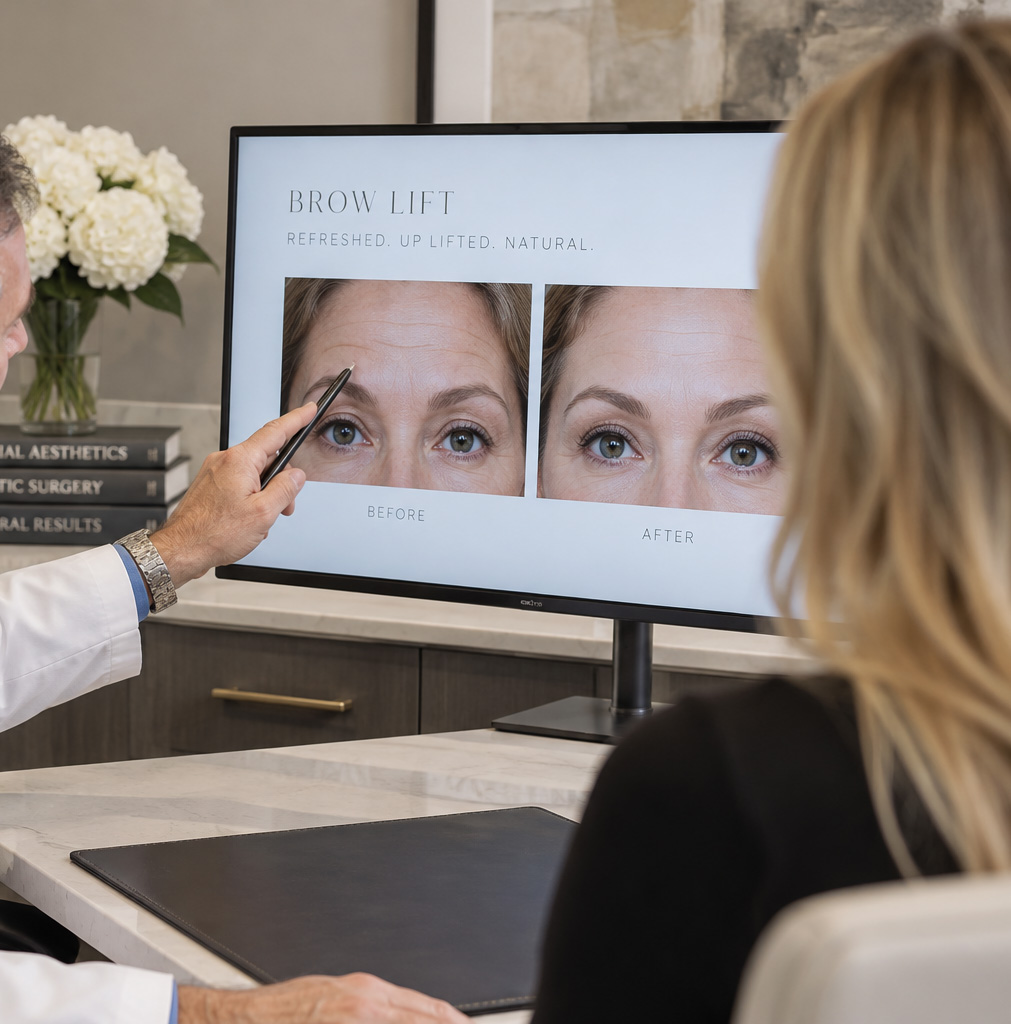
Don’t Let a Heavy Brow Make You Look Tired
As the tissues of the forehead change over time, the brows can gradually descend while horizontal forehead lines and frown lines become more noticeable.
The result may be an appearance that seems tired, serious, or concerned even when that does not reflect how you feel.
A brow lift, sometimes called a forehead lift, repositions the brow and forehead tissues to create a smoother, more refreshed appearance while preserving your natural facial character.
What Can a Brow Lift Improve?
Brow lift surgery focuses on the upper third of the face, including brow position and forehead contour.
Sagging Brows
Elevates brows that have descended and begun to create a heavy appearance over the eyes.
Forehead Lines
Reduces the prominence of horizontal lines across the forehead.
Frown Lines
Can improve vertical creases that develop between the eyebrows.
Upper-Eyelid Hooding
Raising a descended brow can reduce the appearance of heaviness over the upper eyelids.
Tired Appearance
A more appropriate brow position can create a brighter, more rested appearance.
Brow Asymmetry
In selected patients, surgical planning may also help improve differences in brow position.
Brow Lift or Eyelid Surgery?
A heavy-looking upper eyelid does not always originate from the eyelid itself.
In some patients, a descended brow pushes tissue downward, contributing to hooding over the eye. In others, the primary issue is excess upper-eyelid skin.
Dr. Slack evaluates both the brow and eyelids before recommending surgery. Some patients benefit from one procedure, while others may benefit from combining a brow lift with upper blepharoplasty.
Brow Lift
Repositions the eyebrow and forehead tissues when brow descent is contributing to heaviness.
Blepharoplasty
Addresses excess eyelid skin and other eyelid-specific concerns.
Good Candidates for a Brow Lift
Brow lift surgery is highly individualized. Appropriate candidates are generally healthy, have realistic expectations, and are bothered by changes involving the forehead or brow.
Drooping or descended eyebrows
Horizontal forehead lines
Frown lines between the eyebrows
Upper eyelids that appear heavy because of brow position
A consistently tired, stern, or concerned appearance
Realistic expectations about surgical rejuvenation
How Is a Brow Lift Performed?
There is more than one way to perform a brow lift. The appropriate technique depends on your brow position, forehead height, hairline, degree of correction, and surgical goals.
Endoscopic Brow Lift
Several small incisions are made within the hair-bearing scalp. An endoscope and specialized instruments allow the underlying forehead tissues to be visualized and repositioned.
- Smaller scalp incisions
- Hidden within the hair when possible
- Allows precise tissue repositioning
Open / Coronal Brow Lift
An open approach provides direct access to the forehead tissues through a longer incision placed within the hair-bearing scalp.
- Direct surgical visualization
- Can address more extensive brow descent
- Incision is generally concealed within the hair
Hairline Brow Lift
In selected patients, the incision may be positioned at the frontal hairline, particularly when forehead height is an important part of surgical planning.
- Useful in selected forehead anatomies
- Allows brow elevation without unnecessarily raising the hairline
- Scar placement is discussed carefully during consultation
The Endoscopic Brow Lift
An endoscopic brow lift uses a small camera placed through short scalp incisions to give the surgeon a detailed view of the tissues beneath the forehead.
Specialized instruments are then used to release and reposition the brow and forehead tissues into a more appropriate position.
The incisions are closed with sutures, clips, or another appropriate closure method and are generally positioned within the scalp when anatomy allows.
Smaller Incisions. Precise Visualization.
The endoscope gives the surgeon visibility beneath the forehead through several relatively small scalp incisions.
Can a Brow Lift Have a Functional Benefit?
For most patients, brow lift surgery is performed for cosmetic rejuvenation.
In selected patients with significant brow ptosis, however, the descended brow can contribute to hooding and obstruction of the upper visual field.
When this occurs, appropriately repositioning the brow may improve both the sense of heaviness around the eyes and visual function.
When Brow Position Affects Vision
Functional symptoms require a careful examination to determine whether the problem originates from the brow, upper eyelid, or a combination of both.
Preparing for a Brow Lift
Your specific instructions will depend on your health, medications, and surgical plan.
Stop Smoking
Nicotine interferes with healthy circulation and wound healing. Dr. Slack will tell you how long you need to remain nicotine-free before and after surgery.
Review Medications
Dr. Slack's office will review prescription medications, over-the-counter drugs, vitamins, and supplements that may affect surgery or bleeding risk.
Follow Fasting Instructions
Follow the specific eating and drinking instructions provided by the surgical team before anesthesia.
Arrange Transportation
Plan for a responsible adult to drive you home and assist during the initial period after surgery.
Brow Lift Recovery
Swelling, bruising, temporary numbness, tightness, and itching can occur during early healing.
The forehead may be taped or loosely wrapped following surgery, and Dr. Slack will provide detailed instructions for incision care and activity.
Keep Your Head Elevated
Elevation can help manage swelling during the initial recovery period.
Protect the Incisions
Follow all instructions regarding dressings, showering, and incision care.
Avoid Strenuous Activity
Heavy lifting and vigorous exercise remain restricted until Dr. Slack clears you.
Attend Follow-Up Visits
Follow-up appointments allow the surgical team to monitor healing and remove sutures or clips when needed.
Brow Lift Results
The improvement in brow position is visible early, although swelling and bruising initially affect the final appearance.
As healing progresses, the forehead appears smoother and the eyebrows settle into their new position.
A brow lift does not stop the aging process, but the repositioned tissues can provide a long-lasting improvement in upper-face appearance.
Refreshed, Not Surprised
The objective is not simply to raise the eyebrows as high as possible. Good surgical planning considers natural brow position, facial proportions, asymmetry, and the relationship between the brow and eyelids.
Potential Risks of Brow Lift Surgery
Every surgical procedure involves potential risks. Dr. Slack will review these with you before surgery so you can make an informed decision.
Bleeding
Infection
Temporary Numbness
Scarring
Hair Loss Near Incisions
Brow Asymmetry
Hairline Changes
Nerve Injury
Brow Lift Frequently Asked Questions
Common questions about brow position, eyelid hooding, technique, scars, recovery, and results.
A brow lift repositions sagging forehead and brow tissues, elevates the eyebrows, and can reduce the appearance of forehead and frown lines.
The goal of modern brow lift surgery is a natural, refreshed brow position rather than an excessively high or surprised appearance. Surgical planning is based on your existing anatomy and facial proportions.
A brow lift repositions the forehead and eyebrows. Upper eyelid surgery addresses excess skin and other concerns involving the eyelid itself. Some patients benefit from one procedure while others may need both.
Yes, when brow descent is contributing to the hooded appearance. If significant excess eyelid skin is also present, blepharoplasty may be recommended as well.
An endoscopic brow lift uses several small scalp incisions along with a small camera and specialized instruments to visualize and reposition the brow and forehead tissues.
Scar location depends on the surgical technique. Endoscopic incisions are generally placed within the scalp, while other techniques may use incisions within the hair-bearing scalp or along the hairline.
In selected patients with significant brow ptosis, a drooping brow can contribute to upper visual-field obstruction. Repositioning the brow may improve function when brow position is part of the cause. Dr. Slack must evaluate whether your symptoms are related to the brow, eyelid, or another condition.
Recovery varies according to the surgical technique and the individual patient. Swelling and bruising improve progressively, and Dr. Slack will advise you when you can return to work, exercise, and normal activities.
A brow lift creates a long-lasting repositioning of the brow, but it does not stop normal aging. Skin and soft tissues will continue to change gradually over time.
Yes. Depending on your goals and anatomy, brow lift surgery may be combined with procedures such as upper or lower eyelid surgery, facelift surgery, or other facial rejuvenation treatments.
Find Out Which Approach Fits Your Face
Dr. Slack will evaluate your brow position, forehead, hairline, eyelids, facial proportions, and goals before recommending a surgical plan.
Look More Rested Without Looking Different
Meet personally with Dr. Charles Slack in Allen, Texas to discuss whether brow lift surgery can help create the refreshed upper-face appearance you want.
Allen, Texas · Serving Plano, McKinney, Frisco & North Dallas